Product Description
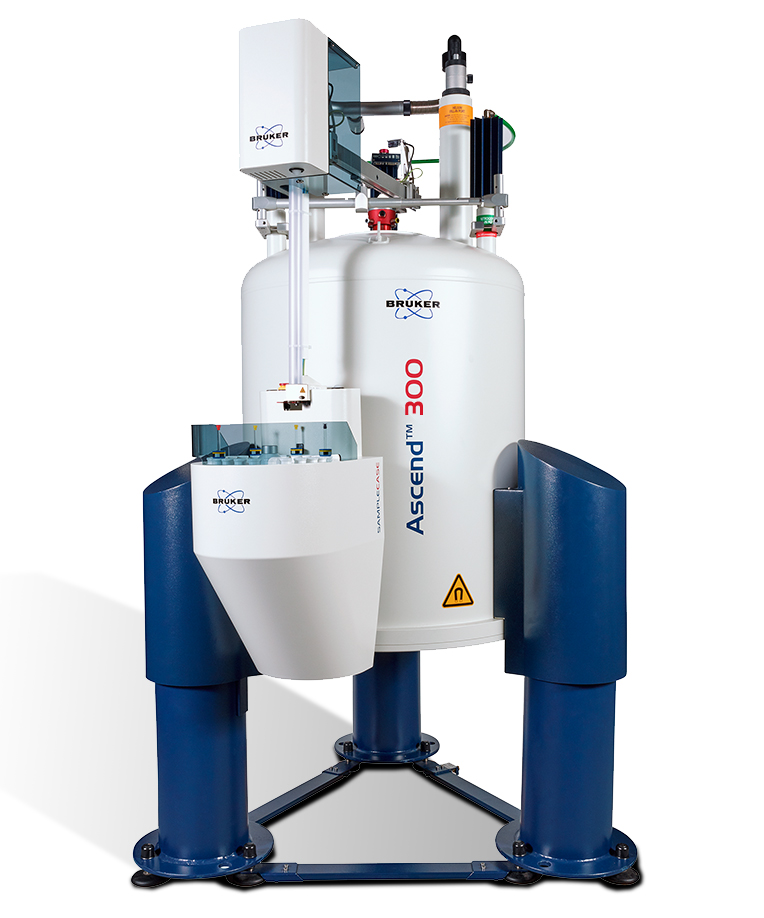
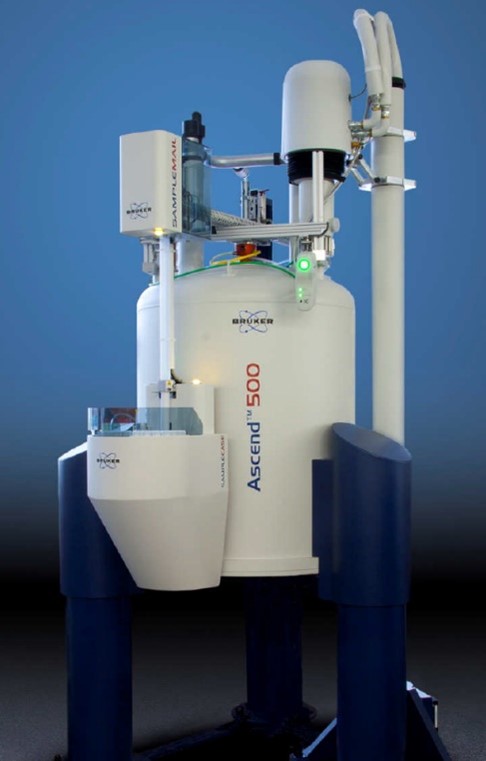
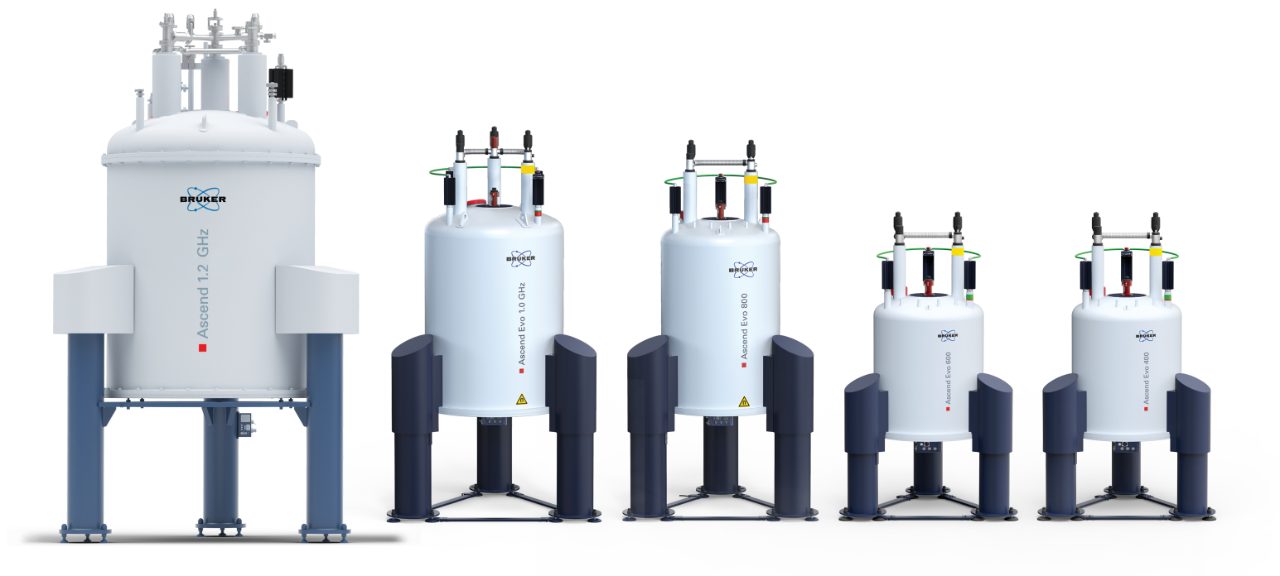
The Nuclear Magnetic Resonance (NMR) Spectroscopy System is a state-of-the-art analytical instrument designed for detailed molecular structure determination, quantitative analysis, and advanced research applications. Widely used in chemistry, pharmaceuticals, biotechnology, materials science, and academic laboratories, NMR spectroscopy provides precise information about molecular composition, atomic connectivity, and dynamic behavior.
Built with high-field superconducting magnet technology and advanced digital signal processing, this NMR system delivers high sensitivity, exceptional spectral resolution, and reliable reproducibility. It is engineered for both routine analytical workflows and complex structural investigations.
Principle of Nuclear Magnetic Resonance
NMR spectroscopy is based on the magnetic properties of atomic nuclei that possess spin, such as hydrogen (¹H) and carbon (¹³C). When placed in a strong magnetic field, these nuclei align with the external field. Upon exposure to radiofrequency (RF) pulses in the radiofrequency region of the electromagnetic spectrum, the nuclei absorb energy and transition between spin states.
As they return to equilibrium, they emit signals detected by the receiver coil. These signals are processed using Fourier Transform (FT-NMR) to generate a spectrum. The resulting spectral data provide detailed information about:
Chemical shifts
Coupling constants
Molecular framework
Functional groups
Molecular symmetry
Purity and composition
Core Features
High-field superconducting magnet for superior resolution
Multi-nuclear detection capability
Automated shimming and calibration
Advanced Fourier Transform processing
High signal-to-noise ratio
Temperature-controlled sample environment
Expandable for solid-state NMR applications
This system supports both research-grade analysis and educational laboratory use.
Applications of Nuclear Magnetic Resonance
1. Organic Structure Determination
NMR is the gold standard for determining the structure of organic molecules. It reveals the arrangement of atoms and connectivity within complex compounds.
2. Pharmaceutical Research
Used for drug discovery, impurity profiling, formulation analysis, and quality control testing.
3. Biochemistry & Proteomics
Supports protein structure analysis, biomolecular interactions, and metabolomics research.
4. Polymer & Materials Science
Evaluates polymer composition, cross-linking density, and material properties.
5. Academic & Research Institutions
Essential for teaching molecular structure, spectroscopy principles, and advanced chemical analysis.
Advantages of NMR Systems
Non-destructive analysis
High reproducibility
Minimal sample preparation
Quantitative and qualitative data
Multi-dimensional spectral capability
Broad application range
Unlike mass spectrometry, which measures mass-to-charge ratios, NMR focuses on atomic-level structural information through magnetic resonance interactions.
Advanced 2D and 3D Capabilities
The system supports advanced multidimensional experiments including:
COSY (Correlation Spectroscopy)
HSQC (Heteronuclear Single Quantum Coherence)
HMBC (Heteronuclear Multiple Bond Correlation)
NOESY (Nuclear Overhauser Effect Spectroscopy)
These techniques allow researchers to analyze complex molecular systems with enhanced clarity.
Instrumentation Components
-
Superconducting Magnet – Generates a strong, stable magnetic field.
-
RF Transmitter – Produces radiofrequency pulses.
-
Probe Assembly – Holds the sample and detects emitted signals.
-
Receiver System – Captures resonance signals.
-
Computer & Processing Software – Converts signals into spectra.
Modern systems incorporate automated calibration and remote monitoring capabilities for improved workflow efficiency.
Safety and Operational Considerations
Due to the presence of strong magnetic fields, the NMR system must be installed in a controlled laboratory environment. Proper shielding, ventilation, and adherence to safety guidelines are required. Only trained personnel should operate the instrument.
Typical Use Case Example
In pharmaceutical development, a chemist synthesizes a new compound. Using ¹H and ¹³C NMR analysis, the chemist confirms the molecular structure, verifies purity, and ensures the absence of unwanted byproducts before proceeding to further testing.
Why Choose This NMR System?
High-field performance for precise results
Flexible configuration options
Expandable modules for advanced research
Reliable long-term operation
Suitable for both research and routine analysis
The Nuclear Magnetic Resonance Spectroscopy System is a critical tool for laboratories requiring high-resolution structural analysis, reproducible data, and advanced research capability.
Conclusion
The Nuclear Magnetic Resonance (NMR) Spectroscopy System represents a cornerstone technology in analytical science. By utilizing strong magnetic fields and radiofrequency energy, it delivers unmatched insight into molecular structure and composition. With customizable configurations, advanced software integration, and broad application coverage, this NMR system provides laboratories with a dependable, high-performance solution for modern scientific research and industrial analysis.